Iboga
Root bark from Central Africa that might stimulate a growth factor for nerve cells. With serious risks for the heart.
Updated: October 2026
What is it?
Iboga (Tabernanthe iboga) is a shrub from Central Africa. Its root bark has been used for centuries in the Bwiti tradition of Gabon. Its active ingredient, ibogaine, is strongly mind-altering at high doses and is being studied in some countries as a treatment for addiction. I have only taken iboga as a microdose, meaning in a very small amount without any intoxicating effect.
What does the research say?
In animal studies, ibogaine increased the growth factor GDNF, which can protect and strengthen dopamine nerve cells. This is exactly the factor that expensive gene therapies like AB-1005 try to deliver into the brain through brain surgery. Ibogaine also increases the growth factor BDNF.
In January 2026, the first case report in Parkinson's appeared in the Journal of Psychedelic Studies (Erny et al.). A 52-year-old woman with Parkinson's received slowly increasing doses of ibogaine for 80 days, up to a maximum of 75 mg a day. Her mobility, quality of life, fatigue and mood improved clearly. There were no serious side effects; only her sleep got worse. I am in contact with Tobias Erny from the University of Zurich. But it remains a single case, and there are no controlled studies in Parkinson's.
A serious risk is well documented: ibogaine can dangerously disrupt heart rhythm, up to and including fatal arrhythmias, even in people with no known heart disease. Experts recommend taking it only under medical supervision with an ECG.
My experience
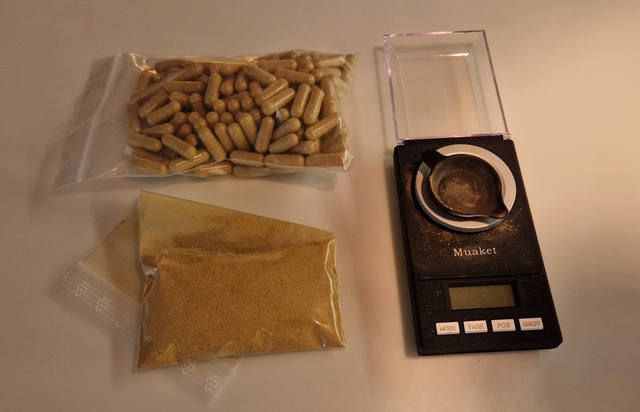
In 2023, 2024 and 2025, each year in January and February in Thailand, I took 0.6 grams of root bark every morning for about six to seven weeks, with an alkaloid content of around 5 percent (about 24 mg of ibogaine). In the first week I had less appetite and at times felt dazed, but hardly at all after that. My Parkinson's symptoms did not change, but I was more relaxed.
My dose was clearly lower than in the case report, and the slow increase was missing. For a next attempt, I am thinking about following that approach, with an ECG and a UPDRS measurement before and after, and only with medical supervision.
Legal situation
Ibogaine is not approved as a drug in Germany. If you buy iboga, you get a product without quality control, and the amount of active ingredient varies widely. It is banned in France and the USA. The legal situation keeps changing.
My conclusion
To me, the GDNF approach is one of the most convincing I know. Because of the heart risks, though, I advise no one to try iboga without medical supervision and ECG monitoring.