Cancer
Personalized medicine instead of one-size-fits-all therapy.
Updated: October 2026
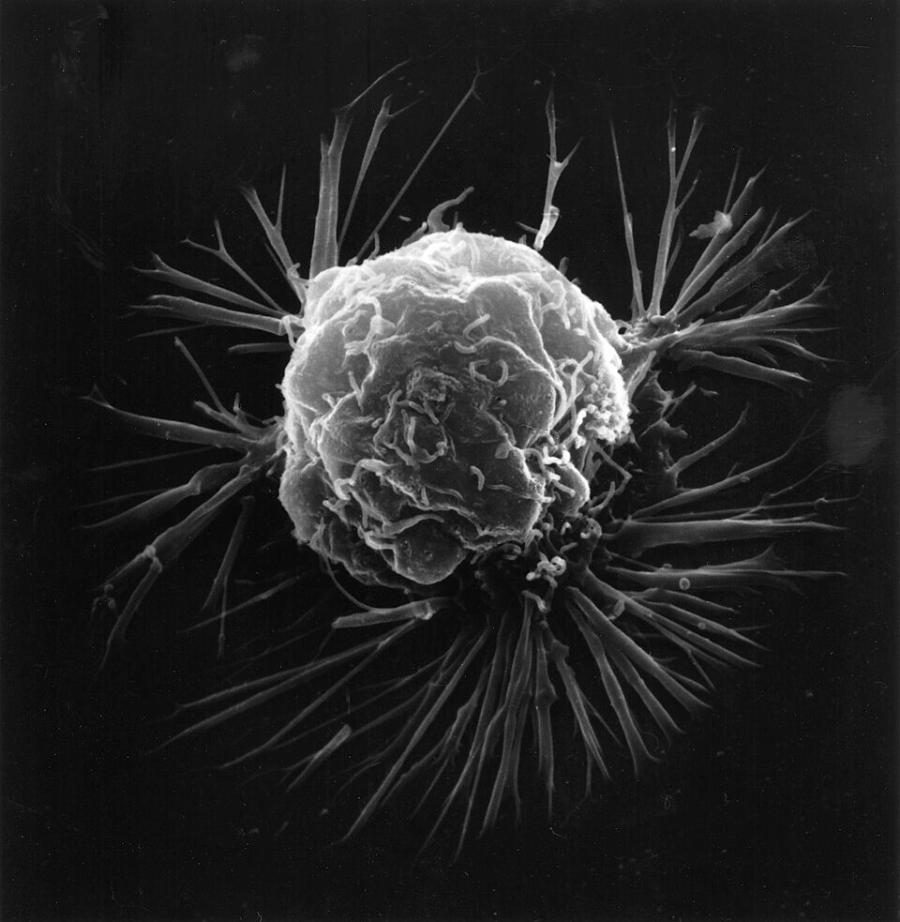

I highly recommend an episode of Nina Ruge's longevity podcast "staYoung" with Prof. Dr. Nisar Malek, director of the Medical Clinic at the University Hospital Tübingen and founding director of the Center for Personalized Medicine. He explains how genome analyses, protein analyses and artificial intelligence are changing cancer medicine.
Topics include:
- personalized cancer therapies instead of one treatment for everyone
- the role of gut flora and mitochondria in aging
- why biological age matters more than the age in your passport
- liquid biopsies, off-label therapies and a learning health care system
News from cancer research (October 2026)
At the end of October 2026, the German tabloid Bild ran the headline "Breakthrough in cancer vaccine!". I looked into what is behind it and what else is new. Here are the highlights.
- Personalized mRNA vaccine against melanoma: Moderna and MSD make an individual mRNA vaccine for each patient from his or her own tumor (intismeran autogene). It is given after surgery together with the immunotherapy Keytruda. In a large trial with 1,137 melanoma patients, 82 percent were free of recurrence after two years, compared with 70 percent on Keytruda alone. The risk of recurrence or death fell by 42 percent (AJMC). This does not mean that 42 percent fewer people died; data on overall survival are still pending. The vaccine is not yet approved. It is now also being tested in lung cancer and other tumors.
- Pancreatic cancer: daraxonrasib: The drug (Rasonque) blocks the RAS protein, which is altered in more than 90 percent of pancreatic tumors and was considered undruggable for decades. In patients with metastases for whom chemotherapy no longer worked, median survival doubled from 6.7 to 13.2 months (AGA). Daraxonrasib has been approved in the USA since August 2026, and the European Medicines Agency EMA recommended approval in October. For me, this is the biggest advance of the year in this particularly severe cancer.
- Rectal cancer: immunotherapy instead of surgery: In a small subgroup (tumors with the dMMR or MSI-H feature), the immunotherapy dostarlimab (Jemperli) can make the tumor disappear completely. In the approval trial with 154 patients, depending on the assessment, no tumor could be detected for at least one year in 47 to 68 percent. So far, around 70 percent needed neither surgery nor radiation nor chemotherapy. The US FDA granted dostarlimab accelerated approval on October 19, 2026.
- CAR-T cells against solid tumors: In June 2026, China approved satri-cel, the first CAR-T cell therapy against a solid tumor, namely advanced stomach cancer. The patient's own immune cells are re-engineered in the lab so that they recognize the cancer. The effect is still modest, but it is a milestone.
- Invikafusp alfa: This new drug specifically activates certain T cells that fight tumors. In an early trial by the US National Institutes of Health (NIH), the cancer stopped progressing in 16 of 27 patients, even though other immunotherapies no longer worked for them.
- Breast cancer: a new class of drugs: Vepdegestrant (Veppanu) has been approved in the USA since May 2026 for hormone-sensitive breast cancer with an ESR1 mutation. It is the first drug of the PROTAC class: it does not just block a cancer-promoting protein, it makes the cell break it down.
My conclusion: Cancer medicine is moving exactly in the direction Prof. Malek describes in the podcast above: away from one-size-fits-all therapy and towards treatments tailored to the individual tumor. The successes usually apply only to certain cancers and tumor features; there is no cure for all cancers. Overall, however, things are clearly moving forward: in the USA, the cancer death rate has fallen by 35 percent since 1991.