N-Acetylcysteine (NAC)
A building block for the body's protective substance glutathione. I am testing it from October 2026.
Updated: October 2026
What is it?
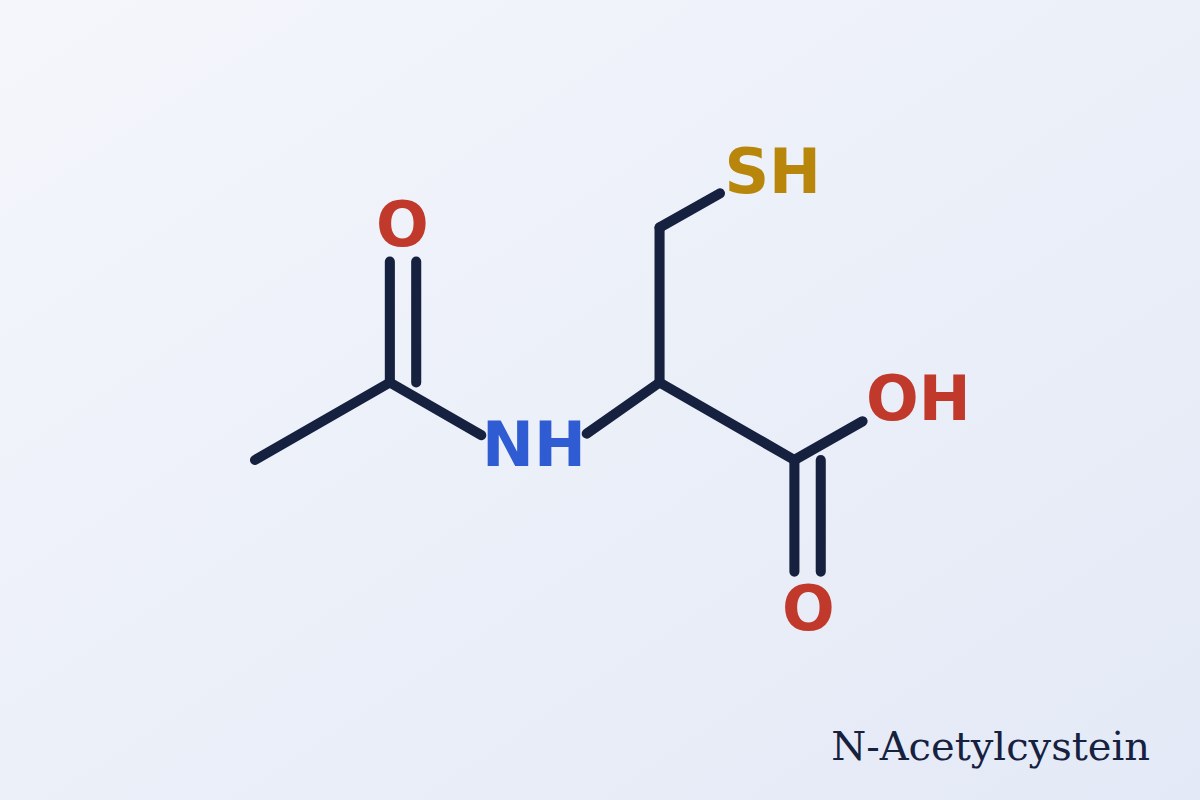
N-acetylcysteine, NAC for short, is a form of the amino acid cysteine. For decades it has been used to loosen mucus in coughs, and in hospitals as an antidote to paracetamol overdose. NAC is interesting for Parkinson's because the body uses it to make glutathione, its most important natural protection against oxidative stress. In Parkinson's, glutathione levels in the substantia nigra, the area with the dopamine nerve cells, are clearly reduced at an early stage.
What does research say?
Earlier small studies at Thomas Jefferson University in Philadelphia had shown that NAC raises glutathione levels in the brain. Two new studies were published in 2026:
- February 2026, Thomas Jefferson University: The team led by Dr. Daniel Monti and Dr. Andrew Newberg randomly split 44 patients into two groups. One group received NAC for six months, once a week as an infusion (50 mg per kilogram of body weight) plus 500 mg twice a day as a capsule. MRI showed better connectivity between the dopamine areas and other parts of the brain, and UPDRS scores improved by about 20 percent. The comparison group only received their usual treatment; there was no placebo, and everyone knew who was getting NAC (Jefferson Health).
- September 2026, pilot study with placebo: 42 patients received 600 mg NAC twice a day or a placebo for one year, in addition to their usual treatment. 32 completed the study. The UPDRS score rose by 5.4 points with NAC and by 9.5 points with placebo. On the dopamine scan, binding declined less with NAC, and mood also developed better. Among those who completed the study, liver and kidney values remained stable. However, side effects were not recorded in detail. The authors stress that the results are preliminary and must be confirmed in a larger study (Metabolic Brain Disease).
The annual overview of all Parkinson's trials also lists NAC among the phase 2 drugs meant to slow the disease (see Study Overview). Proof that NAC slows progression is still missing. But I find the direction of the results so far encouraging.
My experience
Since October 2026 I have been testing NAC, for six months to begin with. If you take NAC and other selenium as well, check how much selenium a product contains in addition (see supplements). I will add my experience here.
Safety
- NAC is considered well tolerated. Stomach and bowel complaints are possible, allergic reactions are rare. The capsules smell slightly of sulphur, which is normal.
- Not together with nitroglycerin (nitro spray for chest pain): a drop in blood pressure and headaches are possible.
- Take oral antibiotics and activated charcoal at least two hours apart.
- Caution with asthma.
- Anyone taking other medication should talk to their doctor first.
Effort and cost
NAC is inexpensive. In German pharmacies it is sold as a cough remedy with 600 mg, usually as effervescent tablets. Small packs are available over the counter, large packs of 100 only on prescription. As a supplement, NAC comes in capsules of 600 or 800 mg; depending on size, one pack lasts several months and costs about 20 to 35 euros.
My conclusion
For me, NAC is a well-tolerated and inexpensive building block that works exactly where Parkinson's shows a deficit: protecting nerve cells from oxidative stress. That is why I am trying it.