Ginkgo Biloba
The special extract from ginkgo leaves showed first signs of benefit in Parkinson's in 2026. I have taken ginkgo on and off for years.
Updated: October 2026
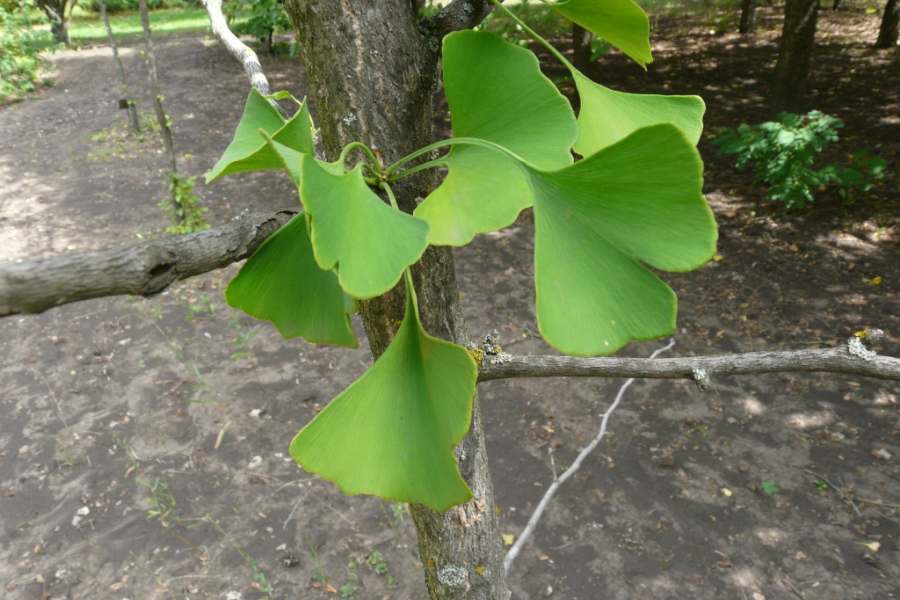

What is it?
Ginkgo products are made from the leaves of the ginkgo tree. They contain flavonoids and the terpene lactones ginkgolides and bilobalide. The best-studied product is the special extract EGb 761. In Germany it is approved as a medicine for memory problems in dementia, usually at 240 mg a day. Ginkgo tea or leaf powder cannot be compared with it.
What does the research say?
- Parkinson's patients, July 2026: Researchers in Kyiv gave 17 people with Parkinson's (aged 48 to 76, Hoehn and Yahr 2 to 3) 240 mg of EGb 761 twice a day for 30 days, in addition to their Parkinson's medication, so 480 mg a day. Afterwards, mobility (UPDRS part 3), daily life (UPDRS part 2) and two memory tests were better. Blood values changed in a way that could fit an increased breakdown of old mitochondria. Some oxidative stress values, however, got worse. Above all, there was no placebo comparison group, so this is only a first hint (Frontiers in Aging Neuroscience).
- Placebo-controlled study, 2023: In Tehran, 63 patients received 240 mg of ginkgo extract a day or a placebo for three months. With ginkgo, tremor, stiffness and slowness improved much more, as did parts of memory. However, these patients had parkinsonism caused by psychiatric drugs, not true Parkinson's disease (Iranian Journal of Pharmaceutical Research).
- Animal study, January 2026: The ginkgo compound bilobalide from ginkgo leaf tea protected mice given the nerve poison MPTP: fewer movement problems, less loss of dopamine nerve cells, calmer inflammation and a more favorable gut flora (Phytomedicine).
- Other animal studies: Many studies show antioxidant, anti-inflammatory and dopamine-protecting effects. Whether this preserves nerve cells in humans is unclear. No ongoing Parkinson's study is registered at ClinicalTrials.gov (as of October 2026).
Side effects and caution
Headaches, stomach upset, dizziness and skin reactions are possible. Ginkgo can increase the tendency to bleed. Anyone taking blood thinners such as aspirin or other anticoagulants, or facing surgery, should discuss taking it with their doctor first.
My experience
I have been taking ginkgo on and off for many years, then not at all for long periods. I have not noticed anything from it. The new 2026 study, however, used 480 mg a day, considerably more than the usual products.
My conclusion
Ginkgo deserves a closer look because there are now first data from Parkinson's patients. An effect has not been proven, though, and the results come from patients who were also taking medication. Nobody knows whether someone without medication, like me, would benefit.