PQQ (Pyrroloquinoline Quinone)
Said to strengthen the cells' power plants and stimulate the formation of new mitochondria. In Parkinson's, so far only studied in animals.
Updated: October 2026

What is it?
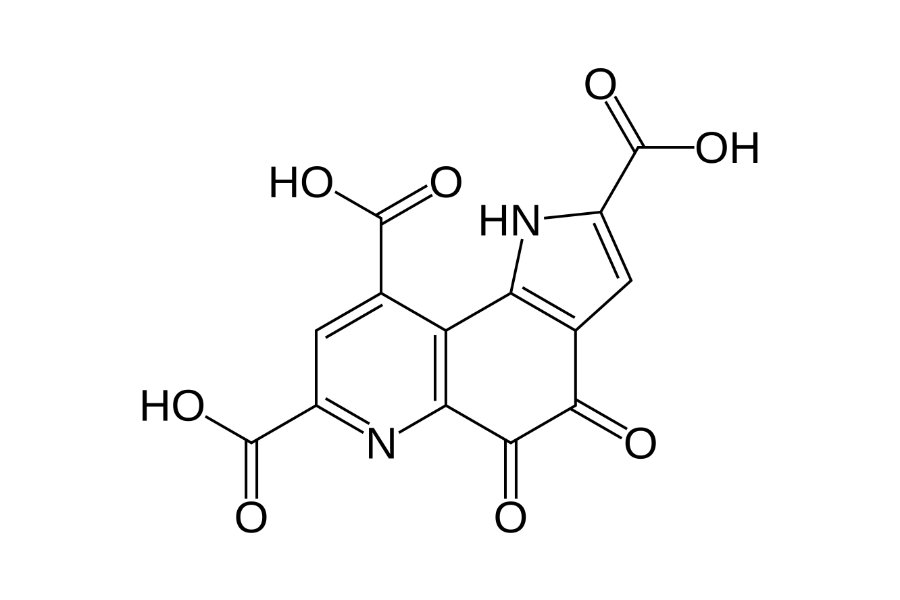
PQQ (pyrroloquinoline quinone) occurs in small amounts in foods such as kiwi, parsley, green tea and natto. As a supplement, it is usually sold as the salt PQQ disodium.
PQQ is interesting because of the mitochondria, the power plants of the cells. In Parkinson's, they often work poorly in the dopamine nerve cells. PQQ is said to stimulate the formation of new mitochondria and to neutralize harmful oxygen radicals.
What does the research say?
- Animal study, 2020: Chinese researchers gave mice the nerve poison rotenone, which causes Parkinson's-like damage. With PQQ, fewer dopamine nerve cells were lost, the animals moved better, and more mitochondria formed again in the brain. This worked via the energy sensor AMPK and the regulatory protein PGC-1α (Acta Pharmacologica Sinica). Doses of 4 and 20 mg per kilogram of body weight were effective.
- Animal study, May 2026: Researchers packed PQQ together with a self-developed protein fragment against clumped alpha-synuclein into modified exosomes, tiny transport vesicles that reach the brain. In Parkinson's mice, movement and memory improved and more dopamine nerve cells survived (Journal of Nanobiotechnology). However, this is an experimental combination, not a PQQ capsule.
- Humans: To date there are no studies in Parkinson's patients. None is registered at ClinicalTrials.gov either (as of October 2026).
Dosage and safety
In 2017, the European Food Safety Authority EFSA assessed PQQ disodium as safe for healthy adults at up to 20 mg a day, but not for pregnant or breastfeeding women (EFSA). That is why most products contain 20 mg per daily dose. Nobody knows an effective dose for Parkinson's, and long-term data in humans are limited.
My experience
I am not taking PQQ at the moment. For my mitochondria I already take coenzyme Q10 and urolithin A. PQQ would go in a similar direction. Whether the combination brings any additional benefit has not been studied.
My conclusion
Scientifically exciting because of the mitochondria, but so far purely laboratory research. I do not yet see any proven protection of the dopamine nerve cells.