High-dose vitamin B1
Dr. Costantini's protocol: many positive reports, but no placebo-controlled study yet.
Updated: October 2026
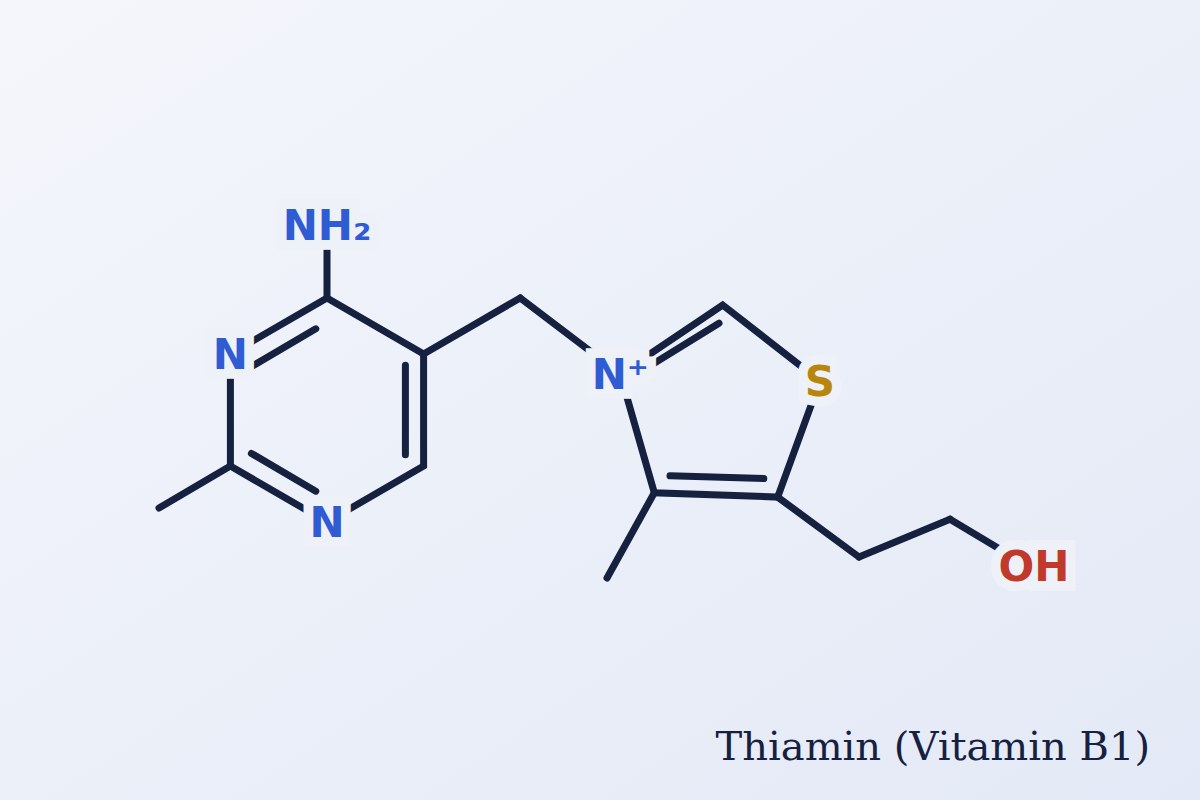
What is it?
Vitamin B1, also called thiamine, is needed by the body for energy metabolism, especially in the nerves and brain. The daily requirement is just over one milligram. From 2012 onwards, the Italian neurologist Dr. Antonio Costantini gave people with Parkinson's many times that amount, first as an injection into the muscle and later also as tablets. He suspected that nerve cells in Parkinson's cannot use the vitamin properly and that very high amounts make up for this deficiency. By his own account he treated more than 2,500 patients. Dr. Costantini died in 2020. His team continues the work, including co-author Marco Colangeli (official site).
What does research say?
- 2013: Three patients with newly diagnosed Parkinson's received 100 mg of thiamine by injection twice a week. Their motor scores improved markedly (BMJ Case Reports).
- 2015: In a study with 50 patients, the total UPDRS score fell on average from 38 to 18 points within three months and then remained stable, with follow-up of up to just over two years (Journal of Alternative and Complementary Medicine).
The numbers are impressive. All studies were open-label, however, meaning without placebo and without a comparison group. To this day there is no study comparing B1 with a placebo. Dr. Costantini's team is raising money to make such a study possible. In October 2025 the team announced a retrospective analysis of its treatment data. A placebo-controlled study is still missing. The Michael J. Fox Foundation does not yet consider the evidence sufficient, but describes thiamine as well tolerated (Michael J. Fox Foundation).
On the other hand, there are a great many positive reports. In the Cure Parkinson's community on HealthUnlocked, people who have followed the protocol for many years report that it has clearly slowed their progression.
How the protocol works
According to Dr. Costantini there is no fixed standard dose. The amount depends on body weight, disease duration and symptoms and is adjusted until the right dose is found. Commonly used were two injections of 100 mg each per week or tablets with several grams a day. One special feature: too much B1 can temporarily worsen symptoms, for example with restlessness, muscle tension or sleep problems if taken late in the day. After a short break this disappears, and the protocol continues at a lower amount.
The 57 questions and answers with Dr. Costantini, translated into German by the Parkinson self-help group in Berlin, are very helpful (parkinsonberlin.de). Daphne Bryant's book, whose author also runs a large Facebook group on the topic, offers practical guidance as well.
My experience
A few years ago I tested high-dose B1 for a while, as far as I remember at about 2 grams a day. I did not notice any effect. However, I was trying many things at the same time back then and did not follow the protocol consistently. Because of the many positive reports, I want to test it properly again within the next one or two years. I will add my experience here.
Effort and cost
Thiamine tablets are inexpensive. The injections require a prescription. Anyone who wants to try the protocol should discuss it with their doctor.
My conclusion
High-dose vitamin B1 is inexpensive, well tolerated and, by their own account, has helped many people with Parkinson's. A placebo-controlled study is still missing. For me it is a building block I have set aside for later.