D-Serine
An amino acid that improved mobility and mood in a small study. For me, only temporarily.
Updated: October 2026
What is it?
D-serine is an amino acid that acts in the brain as a messenger at the NMDA receptor, an important switch for learning and movement control. The body makes most of it itself from L-serine.
What does the research say?
In a small but placebo-controlled study by Gelfin and colleagues (2012), ten Parkinson's patients received 30 mg of D-serine per kilogram of body weight for six weeks in addition to their medication. Their UPDRS scores improved by about 18 percent, their psychological symptoms by around 16 percent, and there were no relevant side effects (PubMed). There are no larger studies so far.
My experience
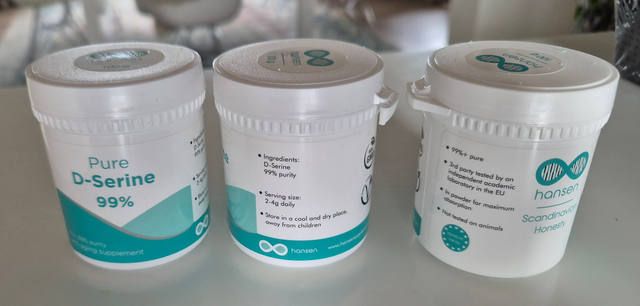
At the end of April 2025, I started with 2.5 grams of D-serine a day (1.25 grams in the morning and in the evening). I had no side effects. At times there were improvements, but they did not last. On July 20, 2025, I paused it because it may have had a negative effect on my bowel movements.
Serine in food
Foods rich in serine include peanuts, millet, walnuts, meat, fish, eggs and soy. The body converts part of it into D-serine.
My conclusion
An interesting idea with a small but clean study. For me, it did not have a lasting effect.