St. John's Wort
A proven herbal remedy for mild depression. In Parkinson's, it protected nerve cells in animal studies, but it has serious interactions.
Updated: October 2026

What is it?
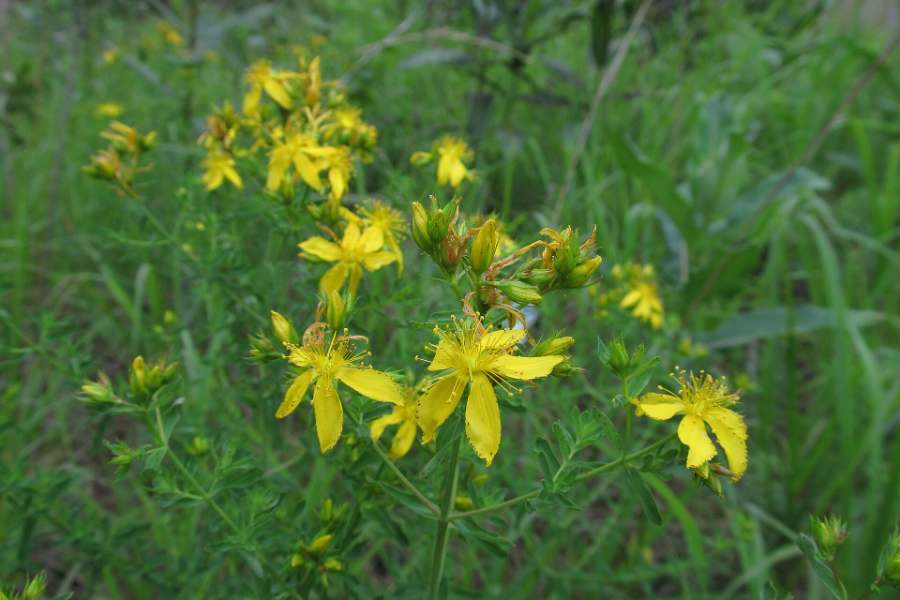
St. John's wort (Hypericum perforatum) is a yellow-flowering medicinal plant. Important ingredients are hyperforin and hypericin. In Germany, St. John's wort extracts are approved as herbal medicines for mild to moderate depressive episodes. Depression is common in Parkinson's, so the remedy matters to many people affected.
What does the research say?
- Animal study, 2016: Researchers in Tehran damaged the dopamine nerve cells of rats with the nerve poison 6-OHDA. From one week before to one week after the damage, the animals received 200 mg of St. John's wort extract per kilogram of body weight daily. Afterwards they moved better, oxidative stress and inflammation in the brain were lower, and fewer dopamine nerve cells died (Cellular and Molecular Neurobiology). This amount cannot be transferred to capsules for humans.
- Animal study, 2013: A Spanish study with the nerve poison rotenone found the strongest protection with an extract rich in hyperforin.
- Newer animal studies: In 2025, compounds from St. John's wort protected zebrafish against the nerve poison MPTP. In December 2025, rats received the extract together with stem cells, and the two together preserved the most nerve cells (Brain and Behavior).
- Humans: Whether St. John's wort protects nerve cells, slows the course or improves tremor in Parkinson's has not been studied. Its effect in mild to moderate depression, on the other hand, is well documented. No ongoing Parkinson's study is registered at ClinicalTrials.gov (as of October 2026).
Interactions: be sure to take note
St. John's wort is not a harmless supplement. It activates enzymes and transporters in the liver and gut that break down medication. As a result, many drugs can become less effective, for example blood thinners, the contraceptive pill, heart medication and drugs taken after an organ transplant. Combined with antidepressants, there is a risk of dangerous serotonin syndrome. It also makes the skin more sensitive to light.
Especially important in Parkinson's: the prescribing information for the MAO-B inhibitor rasagiline (Azilect) explicitly prohibits taking St. John's wort at the same time (Azilect prescribing information). Anyone taking selegiline or other Parkinson's medication should only take St. John's wort after talking to their neurologist.
My experience
I do not take St. John's wort. Since I take no Parkinson's medication, the interaction with rasagiline would not affect me. For most Parkinson's patients, though, it would.
My conclusion
The animal studies are interesting, but I would not recommend St. John's wort today to protect dopamine nerve cells: proof in humans is missing and the interactions are considerable. It can make sense for mild depression, but then only in consultation with a doctor.